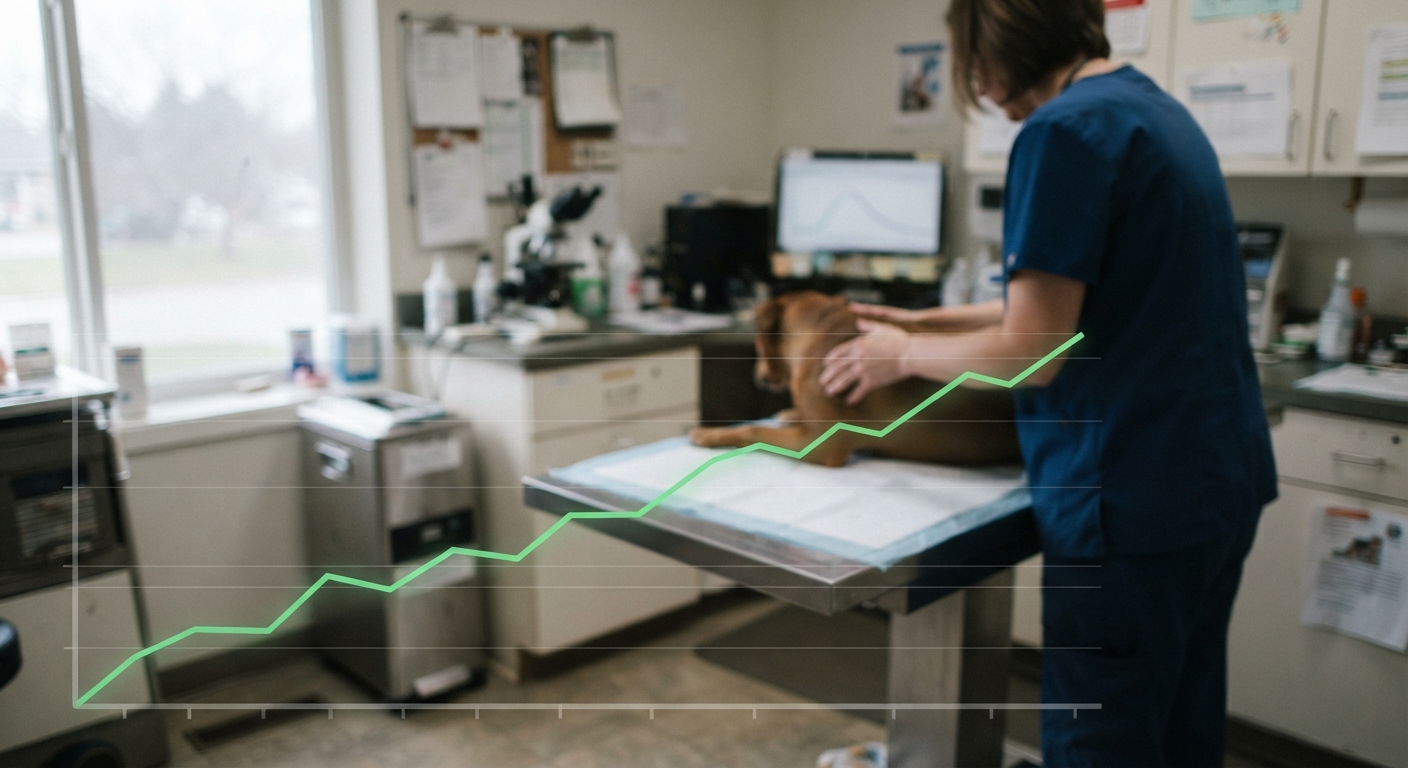

If you’ve taken your dog or cat to the vet recently and felt a little sticker shock, you’re not imagining things. Veterinary care has been getting more expensive at a pace that outstrips what most of us see at the grocery store or the gas pump, and it’s been happening for years, not just in one bad stretch. General consumer prices have risen steadily, sure, but the cost of veterinary services has consistently climbed faster than that broader inflation trend. Checkups, diagnostics, surgeries, medications — nearly every category of pet care has gotten pricier, and the gap between “what things cost overall” and “what vet care costs” has been widening rather than closing.
This isn’t a one-year blip caused by a single supply chain hiccup or a temporary staffing crunch. It’s a longer-running pattern, and it matters for anyone budgeting for a dog or cat, because it doesn’t just affect your out-of-pocket bill at the clinic. It also shapes how much your pet insurance premium creeps up at renewal time, year after year. Understanding why this is happening puts you in a much better position to plan ahead instead of getting blindsided.
What’s actually pushing veterinary costs higher
There isn’t one single villain here — it’s a handful of forces pushing in the same direction at once.
Specialty equipment and advanced care
Veterinary medicine has gotten a lot more sophisticated. MRI machines, CT scanners, advanced bloodwork panels, and specialty surgical equipment that used to exist only in human hospitals are now common in veterinary settings, especially at referral and emergency centers. That equipment is expensive to buy, expensive to maintain, and requires trained staff to operate. Clinics that invest in these capabilities pass those costs along, and pet owners increasingly expect (and benefit from) this level of diagnostic precision. It’s better medicine, but better medicine tends to cost more.
Consolidation of clinics under corporate ownership
Many independent veterinary practices have been acquired by larger corporate groups over the past decade or more. This isn’t inherently bad for care quality, but it does change the pricing dynamics. Corporate-owned practices often standardize pricing, invest more in facilities and equipment, and answer to different financial expectations than a single-owner clinic did. When a large share of the market consolidates under a smaller number of ownership groups, pricing tends to trend upward and become more uniform across a region, which can reduce the kind of price competition that used to keep costs in check at smaller, independently run clinics.
Drug and supply pricing
Medications used in veterinary care — anesthesia drugs, pain management, specialty prescriptions — have followed a similar upward path to human pharmaceuticals. Some of this is driven by manufacturing and supply costs, some by demand for newer, more targeted drugs that didn’t exist a decade ago. Either way, the pharmacy line item on a vet bill has grown noticeably heavier over time.
Staffing shortages
There’s a well-documented shortage of veterinarians and veterinary technicians relative to the demand for pet care. Fewer available professionals means clinics compete for talent with higher wages and benefits, and it also means some clinics operate with longer wait times, extended hours, or overflow into emergency and urgent care settings — which are typically priced at a premium. Staffing costs are a major part of any clinic’s overhead, and when that overhead rises, it shows up in the price of an exam, a bloodwork panel, or a routine procedure.
Put these four forces together — better but pricier technology, fewer independent competitors, costlier drugs, and a tight labor market — and you get a pretty clear picture of why the cost of a vet visit has been on a steady upward climb that outpaces general inflation.
How this trickles down into your premium
Pet insurance works on a pretty simple principle: the company collects premiums from a large pool of policyholders and pays out claims from that pool when pets get sick or hurt. If the average claim amount goes up — because an ultrasound now costs more than it did a few years ago, or because a torn ligament repair runs higher than it used to — the insurer’s payouts as a whole go up too. To keep the math balanced, premiums for the group of policyholders need to rise as well.
This is why you’ll often see your premium increase at renewal even if your pet hasn’t filed a single claim that year. It’s not necessarily about your pet’s individual history (though that plays a role too, especially as pets age). It’s about the overall cost trend across the entire pool of insured pets in your area or breed category. If veterinary costs in your region have jumped, insurers adjust pricing to reflect that reality, because they have to keep enough money coming in to cover what they’re paying out.
It’s worth remembering that this is a structural feature of how insurance pricing works, not a sign that something has gone wrong with your particular policy. Rising claims costs across the industry get spread across premiums industry-wide. The pace and size of those increases can vary by company and by plan design, but the underlying pressure — veterinary costs rising faster than general inflation — affects nearly everyone holding a policy.
Why some services are inflating faster than others
Not all veterinary costs are rising at the same rate. If you look closely, certain categories are climbing noticeably faster than routine, preventive care like annual checkups or basic vaccinations.
Advanced imaging — MRIs, CT scans, ultrasounds — sits near the top of that list. These procedures require expensive equipment, specialized training to interpret results, and often a referral to a specialty or emergency facility rather than your regular vet’s office. The overhead behind offering these services is high, and that overhead gets reflected directly in the price tag.
Specialist care follows a similar pattern. Veterinary oncologists, cardiologists, neurologists, and internal medicine specialists represent a small slice of the veterinary workforce relative to demand, and their services are priced accordingly. As more pet owners seek out this level of care for serious conditions (partly because it’s more available now than it used to be, and partly because outcomes are genuinely better with specialized treatment), demand for these limited resources pushes prices higher.
Emergency and after-hours care is another fast-climbing category. Emergency clinics carry higher fixed costs — round-the-clock staffing, standby equipment, and the ability to handle unpredictable caseloads — and those costs get built into every visit, whether it’s a true crisis or something that turns out to be manageable. Because emergency visits are, by definition, unplanned, they’re also the visits most likely to catch a pet owner financially off guard.
Routine, preventive care has risen too, but at a comparatively gentler pace. Annual wellness exams, standard vaccinations, and basic parasite prevention are more predictable and less resource-intensive for a clinic to provide, so their pricing has stayed relatively more stable. This is part of why preventive care remains one of the better values in the pet budgeting world — it costs a fraction of what a major diagnostic workup or emergency visit runs, and it can help catch problems before they escalate into the expensive stuff.
What you can actually do about it
None of this means you’re powerless against rising costs. There are concrete steps that can help you keep your pet care budget steady even as the underlying cost environment keeps climbing.
Consider coverage while your pet is young and healthy
Pet insurance pricing is heavily influenced by age and pre-existing conditions. A young, healthy pet typically qualifies for lower premiums and broader coverage than an older pet or one who has already developed a chronic condition. If you’re on the fence about whether insurance makes sense for your household, know that waiting doesn’t make the decision easier — it usually makes coverage more expensive and more limited, since conditions that develop before you enroll generally won’t be covered once you do sign up. Locking in a policy earlier in your pet’s life is one of the most effective ways to manage long-term costs, even if the immediate premium feels like an added expense you’d rather skip.
Build a cash buffer alongside any insurance
Even the best insurance policy usually involves a deductible, a reimbursement percentage, and a claims process that takes some time to pay out. Having a dedicated savings cushion — even a modest one set aside specifically for pet expenses — gives you breathing room to cover a bill upfront while you wait for reimbursement, or to handle costs that fall outside what your policy covers. Think of insurance and savings as two tools working together rather than one replacing the other.
Review your policy every single year
Don’t treat your pet insurance policy as a “set it and forget it” purchase. Read your renewal notice closely each year. Compare the new premium to the old one, check whether your coverage limits or reimbursement percentages have shifted, and make sure the policy still fits your pet’s current life stage and health needs. Insurers periodically adjust plan structures, and a policy that made sense for a two-year-old dog might not be the ideal shape for coverage once that same dog turns eight. This annual check-in doesn’t need to take long, but it’s the single easiest way to stay ahead of quiet changes rather than discovering them the hard way when you file a claim.
Lean into preventive care
Since routine care has inflated more slowly than emergency and specialist services, staying consistent with checkups, dental care, and preventive treatments is one of the more budget-friendly ways to reduce your odds of facing a major, expensive diagnosis down the road. It’s not a guarantee against costly surprises, but it tilts the odds in your favor.
What to look for in your renewal notice
When your renewal paperwork arrives, a few signals can tell you whether a premium change is being driven by broader cost trends rather than something specific to your pet.
Look for language referencing “regional claims experience,” “veterinary cost trends,” or “rate adjustments” applied broadly to a group of policyholders rather than language tied specifically to your pet’s claims history. Compare the percentage increase to what you’ve seen in past years — a steady, moderate climb each year is consistent with the general cost trend we’ve described here, while a sudden, sharp jump might warrant a call to the insurer to ask directly what’s driving it. Also check whether your coverage limits, deductible, or reimbursement percentage changed alongside the premium; sometimes a rate adjustment comes bundled with quieter changes to what’s actually covered, and those details matter just as much as the price itself.
Rising veterinary costs aren’t going away, and understanding the forces behind them won’t make your next bill smaller. But it does mean you’re not caught off guard, and you can plan your household budget — and your insurance decisions — with clearer eyes instead of reacting after the fact.