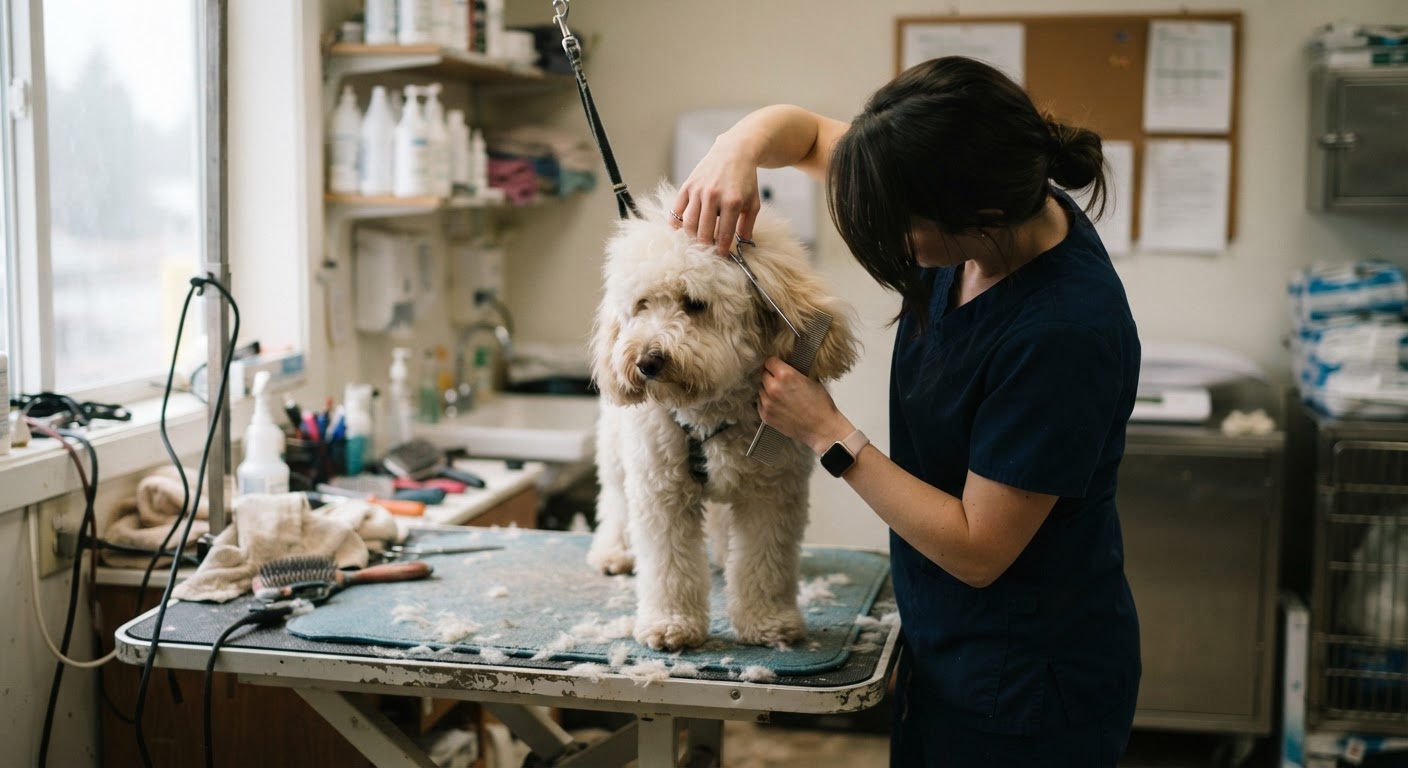
Why Grooming Is Part of Preventive Health, Not Just Cosmetics
It’s easy to think of grooming as the “extra” line item in pet care—something for owners who want their dog looking sharp for photos or their cat smelling fresh. But regular grooming does more than keep your pet presentable. It’s one of the simplest ways to catch small problems before they turn into expensive ones.
Matted fur isn’t just unsightly. Mats pull on the skin, trap moisture, and create a warm, damp environment where bacteria and yeast thrive. Left long enough, matting can lead to skin infections that require a vet visit, medicated shampoo, oral antibiotics, or in severe cases, sedation to shave out mats that have become painfully tight against the skin. What started as a grooming inconvenience becomes a medical bill.
Nail care works the same way. Overgrown nails change how a dog or cat walks, putting stress on joints and altering posture over time. In more advanced cases, nails curl inward and grow into the paw pad, causing pain, infection, and sometimes the need for a vet to numb the area and remove the nail. Regular trims are cheap and quick. Treating an ingrown nail is neither.
Ears deserve the same attention, especially for dogs with floppy ears or heavy coats around the ear canal. Trapped moisture and debris create the conditions for ear infections, which are among the most common reasons dogs end up at the vet. A quick cleaning as part of a grooming routine can head off weeks of discomfort, prescription drops, and follow-up visits.
None of this means grooming replaces veterinary care. But it functions as a first line of defense—catching lumps, hot spots, ear odor, or skin changes early, often before they’ve become painful or expensive to treat.
Typical Costs for Professional Grooming, Nail Trims, and Ear Cleaning by Pet Size and Coat Type
Grooming costs vary a lot depending on where you live, the individual groomer’s pricing, and your pet’s size, coat type, and temperament. Rather than quote numbers that won’t hold up across different regions and groomers, it’s more useful to understand the factors that push prices up or down so you can get accurate quotes locally.
Size is one of the biggest cost drivers. Larger dogs simply take more time, more shampoo, more drying, and more physical effort to groom, so full-service grooming for a large or giant breed typically costs noticeably more than for a small dog or cat. Coat type matters just as much as size. Short, smooth coats (think many cats, or short-haired dog breeds) require less work than long, curly, or double coats that mat easily and need regular brushing, de-shedding, or trimming to stay manageable.
Frequency also affects your total spend. Dogs with coats that grow continuously, rather than shedding on a natural cycle, often need grooming appointments every few weeks to prevent matting, while short-coated pets might only need a bath and nail trim a few times a year. Cats, especially long-haired breeds, may need occasional professional grooming too, even though many owners assume cats groom themselves adequately.
Add-on services—nail trims, ear cleaning, teeth brushing, anal gland expression—are usually priced separately from a full groom, and many groomers offer them as standalone services if you just need a quick nail trim between full appointments. This can be a budget-friendly way to keep up with the smaller maintenance tasks without paying for a full grooming session every time.
Because pricing varies so much by region and by individual groomer or salon, the best move is to call a few local groomers and ask for their price list by service, size, and coat type. Many will quote over the phone once they know your pet’s breed or approximate size and coat length. Building a relationship with one groomer over time can also help, since they’ll get to know your pet’s specific needs and can flag early if something looks off.
DIY vs Professional Grooming: Where the Real Savings and Real Risks Are
Doing some grooming at home is one of the most effective ways to cut costs, but it’s worth being honest about where DIY makes sense and where it can backfire.
Brushing is the easiest and safest task to take on yourself. Regular at-home brushing between professional appointments reduces matting, distributes natural oils through the coat, and gives you a chance to notice lumps, ticks, or skin irritation early. This is pure upside: it costs you time and a decent brush, and it can meaningfully extend the time between professional grooming sessions.
Bathing at home is also manageable for most owners, as long as you use a pet-safe shampoo and are careful about water temperature and getting your pet fully dry afterward, since trapped moisture near the skin or in the ears can contribute to the same infections regular grooming is meant to prevent.
Nail trims are where DIY gets riskier. It’s absolutely something many owners learn to do safely, but it takes practice, the right tool, and a calm animal. Trim too short and you can hit the quick, causing bleeding and pain, and a bad experience can make a pet fearful of future nail trims, turning a two-minute task into a stressful ordeal for years. If your pet has dark nails where the quick is hard to see, or your pet is anxious about paw handling, it’s often worth paying a professional, at least until you build confidence and your pet gets used to the process.
Ear cleaning at home is reasonable for routine maintenance with a vet-recommended solution, but it’s not the place to experiment or dig deeper than the outer ear. The ear canal is sensitive, and improper cleaning can push debris further in or cause irritation. If your pet’s ears already look red, smell off, or seem painful to the touch, that’s a sign for a vet visit, not a home remedy.
Clipping or trimming coats yourself is the highest-risk, highest-skill DIY task. Clippers can nick skin, especially around sensitive areas, and cutting a heavily matted coat without proper technique can injure the skin underneath the mat, which is often not visible until the mat is removed. For pets with coats that need regular trims, this is usually where professional grooming earns its cost.
A reasonable middle ground for many households: handle brushing and bathing at home, pay for professional nail trims until you’re confident doing them yourself, and leave coat trimming and problem-ear cleaning to professionals or your vet.
Why Pet Insurance Almost Never Covers Routine Grooming, and the Rare Exceptions
If you have pet insurance or are shopping for a policy, it’s worth setting expectations early: routine grooming is considered a wellness or maintenance expense, not a medical one, and it falls outside what standard accident-and-illness pet insurance policies are built to cover. Insurers price and structure these policies around unexpected, medically necessary care—things like injuries, illnesses, and diagnostic testing—not the predictable, recurring costs of keeping a coat, nails, and ears in good shape.
Some insurance providers offer optional wellness add-ons or riders that reimburse a portion of routine care costs, and grooming sometimes appears on the list of eligible expenses within those add-ons, alongside things like nail trims or annual exams. These add-ons typically come with their own separate premium and annual caps, so it’s worth doing the math on whether the added premium cost is likely to be less than what you’d spend on grooming anyway. For many households, it’s cheaper to simply budget for grooming directly rather than pay ongoing premiums for a wellness rider that reimburses a capped amount.
The one place grooming and insurance intersect more naturally is when a groomer’s visit turns up something that needs veterinary attention, or when a coat or skin condition requires medicated grooming as part of treating a diagnosed medical issue. If your vet prescribes a specific medicated shampoo or a therapeutic grooming protocol to manage a skin condition, that treatment may be eligible for reimbursement under a standard accident-and-illness policy, because it’s being directed by a vet as part of treating a covered condition rather than as routine upkeep. The distinction insurers draw is usually between “maintenance to prevent problems” (not covered) and “treatment to resolve a diagnosed problem” (potentially covered). It’s worth reading your specific policy’s wording closely, since coverage details and definitions vary by provider.
Building Grooming and Upkeep into Your Monthly Pet Budget Alongside Food and Preventives
The easiest way to keep grooming from feeling like a surprise expense is to treat it the same way you treat food, flea and tick prevention, or heartworm medication: a predictable, recurring line item rather than an occasional splurge.
Start by mapping out how often your specific pet realistically needs each type of upkeep. A long-coated dog that mats easily might need professional grooming every several weeks, while a short-haired cat might only need occasional nail trims and the rare bath. Once you know the frequency, you can average the cost out monthly, even if you’re only paying for a service every few weeks. Setting aside a consistent monthly amount, whether in a dedicated savings account or simply a mental line item in your budget, smooths out the unevenness of paying larger amounts less frequently.
It also helps to think of grooming as connected to your other preventive spending rather than separate from it. Food, preventive medications, routine vet checkups, and grooming all work toward the same goal: catching and preventing problems while they’re still small