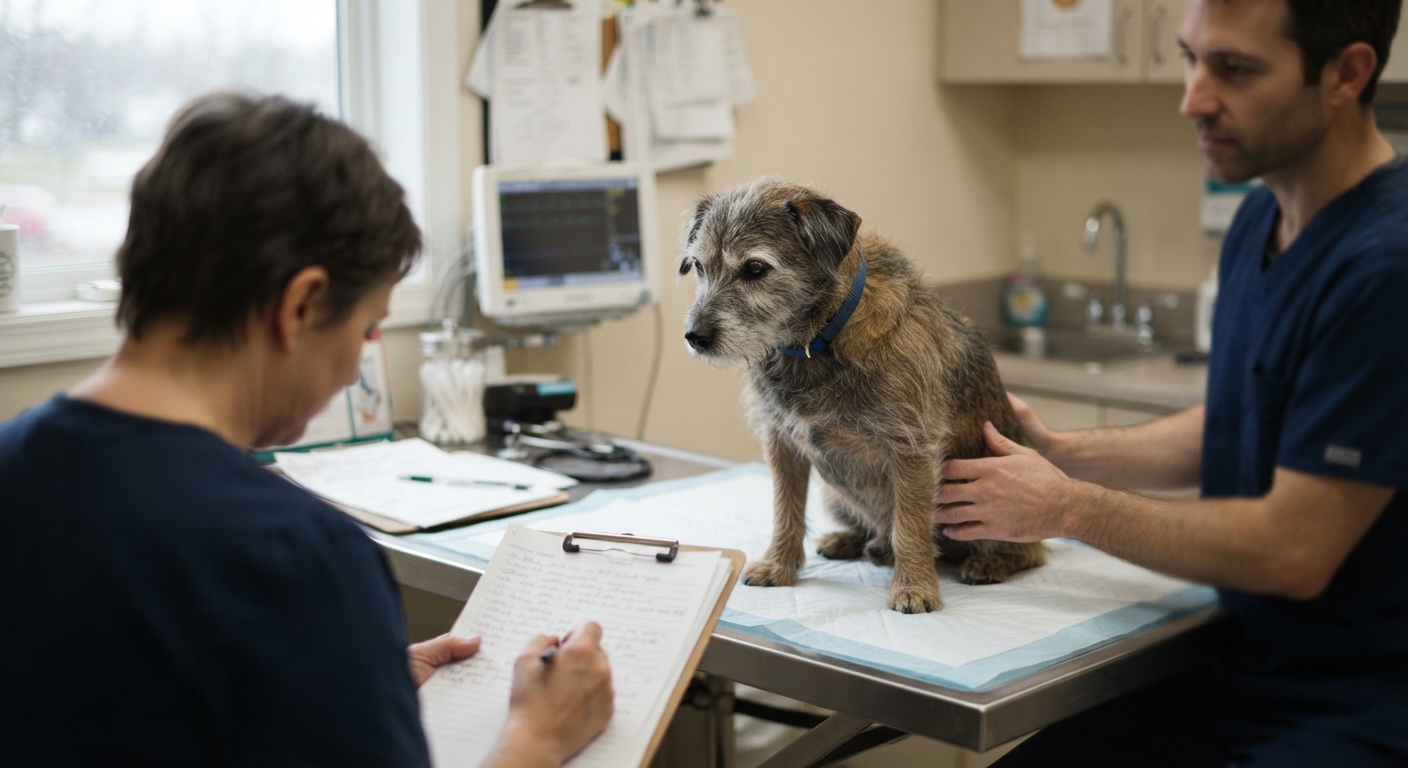

What Cushing’s Disease Actually Means for Your Dog
Cushing’s disease, also called hyperadrenocorticism, happens when a dog’s body produces too much cortisol, the hormone that helps regulate stress, metabolism, and immune response. Most cases come from a small growth on the pituitary gland, and a smaller number come from a growth on one of the adrenal glands. Either way, the result is the same: the body’s cortisol thermostat gets stuck on high, and that affects nearly everything from thirst and appetite to skin health, muscle tone, and energy levels.
Here’s the part that matters most for your budget: Cushing’s disease is not something a vet treats once and moves on from. It’s a hormonal imbalance that needs to be managed continuously, usually for the rest of your dog’s life. Medication can control the symptoms and get cortisol levels back into a healthy range, but it has to be dosed carefully and monitored regularly, because too much or too little can cause its own problems. That ongoing balancing act is why Cushing’s disease shows up so often in conversations about long-term pet care costs. It’s less like fixing a broken bone and more like managing diabetes or thyroid disease in a person — a permanent part of your dog’s healthcare routine rather than a single expense you pay and then forget.
Understanding this upfront helps you plan realistically. Instead of asking “what will this cost to fix,” the better question is “what will this cost to manage, year after year.”
What Diagnosis Typically Involves
Getting to a Cushing’s diagnosis usually isn’t a single test — it’s a process, and that process has its own cost. Vets typically start with basic bloodwork and urine tests to rule out other conditions that can look similar, like kidney disease or diabetes. If Cushing’s is still suspected, more specific testing follows.
The two most common confirmatory tests are the ACTH stimulation test and the low-dose dexamethasone suppression test. Both involve drawing blood, giving the dog an injected substance, and drawing blood again at set time intervals to see how the adrenal glands respond. These tests take longer than routine bloodwork and require the dog to stay at the clinic for several hours, which adds to the cost compared to a standard vet visit.
Once Cushing’s is confirmed, many vets recommend an abdominal ultrasound to check the adrenal glands and look for a specific type of tumor, since that can affect treatment decisions. This step isn’t always required, but it’s common enough that it’s worth budgeting for as part of the diagnostic phase rather than treating it as a surprise add-on.
It’s also worth knowing that these tests often aren’t one-time events. Because Cushing’s can look similar to other conditions early on, some dogs need repeat testing before a vet is confident in the diagnosis. And even after treatment starts, follow-up versions of these tests are used to see whether the medication dose is working the way it should. So when you’re mentally budgeting for “the diagnosis,” it helps to think of it as a cluster of visits and tests spread over several weeks, not a single afternoon at the vet.
The Ongoing Cost of Medication and Monitoring
Once a dog is diagnosed and started on medication, the costs shift from occasional and large to smaller and recurring — but they don’t go away. Daily medication is typically an ongoing prescription cost, refilled monthly or every few months depending on your vet and pharmacy setup. The specific medication and dosage your vet prescribes will affect the price, and dosage is often based on your dog’s weight, so larger dogs may cost more to medicate than smaller ones.
What surprises a lot of pet owners isn’t the medication itself — it’s the bloodwork that goes along with it. Because the medications used to manage Cushing’s disease work by suppressing cortisol production, too much can cause the opposite problem: cortisol levels that drop too low, which comes with its own set of risks. To avoid that, vets recheck bloodwork periodically, especially in the early months, to make sure the dose is calibrated correctly. This usually means another round of ACTH stimulation testing or similar bloodwork, not just a quick in-and-out appointment.
Because dosing adjustments are common, especially in the first several months, it’s realistic to expect more than one round of this monitoring before things settle into a stable routine. Once your dog’s dose is holding steady and their symptoms are well controlled, the frequency of testing usually decreases, but it rarely stops completely. Most dogs on long-term Cushing’s treatment continue periodic bloodwork indefinitely, just spaced further apart than in the beginning.
When you’re building a budget, it helps to separate this into two buckets: the relatively predictable cost of the medication itself, and the less predictable but still recurring cost of monitoring bloodwork. Both need a place in your annual planning.
How Often You’ll Be Back at the Vet
The first year after a Cushing’s diagnosis tends to be the busiest in terms of vet visits. It’s common to have a recheck appointment with bloodwork roughly a month after starting medication, since that’s often when the first dose adjustment happens. Depending on how your dog responds, additional rechecks may follow every few months as the vet fine-tunes the treatment plan. Each of these visits typically includes an exam, a discussion of any symptom changes, and some form of bloodwork, so the cost of a “recheck” is rarely just the office visit fee alone.
Once your dog’s cortisol levels and symptoms are stable, most vets shift to a lower-frequency monitoring schedule, often settling into checkups every six months or so, sometimes annually if things stay consistent. These later visits are usually less intensive than the early ones, but they still tend to include bloodwork to catch any drift in cortisol levels before it becomes a bigger problem.
It’s worth asking your own vet what their typical monitoring schedule looks like, since this varies based on how your dog responds to treatment and your vet’s individual approach. But as a general planning principle, expect the first year to cost noticeably more in visit frequency than subsequent years, and expect monitoring to remain part of your dog’s routine care indefinitely rather than tapering off completely.
Pet Insurance and Timing: Why It Matters So Much Here
This is the section that trips up a lot of pet owners, so it’s worth being direct about it. Pet insurance policies generally do not cover pre-existing conditions — meaning any condition that showed symptoms, was diagnosed, or was treated before your coverage started or before a waiting period ended. Cushing’s disease is a textbook example of why this distinction matters so much.
If your dog is enrolled in a policy well before any signs of Cushing’s appear, and the condition is diagnosed after your coverage is active and any waiting periods have passed, there’s a reasonable chance the diagnostic testing, medication, and ongoing monitoring could be eligible for reimbursement, depending on your specific policy’s terms. But if your dog already had symptoms — even vague ones like increased thirst or hair loss that hadn’t yet been connected to Cushing’s — before you enrolled, insurers can classify the condition as pre-existing based on your dog’s medical records, and exclude it from coverage going forward, even if the formal diagnosis comes later.
This is why the timing of enrollment matters more than most people realize. Insurance is designed to help with unpredictable future costs, not conditions that are already underway. Since Cushing’s disease tends to develop gradually and often shows subtle symptoms for a while before diagnosis, it’s the kind of condition where waiting to enroll “until something seems wrong” can backfire. If you’re insuring a middle-aged or senior dog, or a breed known to be more prone to hormonal conditions, enrolling while your dog is healthy and symptom-free is the only way to give a policy a real chance of covering something like this if it develops later.
It’s also worth reading your policy’s specific language around chronic and hormonal conditions, waiting periods, and how they define “pre-existing,” since these details vary by insurer and matter a lot for a lifelong condition like this one.
Building an Annual Budget Line for a Chronic Condition
Once your dog is stable on treatment, it helps to stop thinking about Cushing’s costs as a series of individual vet bills and start thinking about them as a single annual budget line, similar to how you might budget for a recurring household expense. That line should include a few components: the cost of daily medication over twelve months, the cost of two or so monitoring visits with bloodwork in a typical stable year, and a small cushion for the possibility of an extra visit if symptoms flare up or a dose needs adjusting.
It’s worth calculating this number for your own dog with your own vet’s pricing, since costs vary by region, clinic, and your dog’s size and medication dose. But having that annual figure in front of you — rather than experiencing it as a string of unpredictable bills — makes it much easier to plan around. Some pet owners set up a dedicated savings amount each month specifically for ongoing condition management, treating it the way they might treat a subscription or a utility bill: predictable, recurring, and planned for rather than dreaded.
If your dog has other health considerations alongside Cushing’s, it’s worth building those into the same annual view rather than budgeting for each condition in isolation, since vet visits often address multiple things at once.
Questions Worth Asking Your Vet Now
A big part of avoiding financial surprises with a chronic condition is simply asking the right questions before you’re standing at the front desk. Consider asking your vet: What does a typical monitoring schedule look like for a dog on this medication, and how does it usually change after the first year? Roughly what does each recheck visit tend to cost, including bloodwork? Is there a generic or lower-cost version of the medication, and does the dose typically need adjusting over time as dogs age? What symptoms would signal that a recheck should happen sooner than scheduled? And if cost is a concern, are there ways to space out non-urgent monitoring without compromising your dog’s safety?
None of these questions require a vet to guess about your specific dog’s future — they’re about understanding the general pattern of care so you can plan your own budget around it. Getting clear answers early means that when a bill does arrive, it’s a number you were already expecting, not one that catches you off guard.