Why anesthesia is priced and billed separately from the procedure itself
When you get an estimate for your dog’s dental cleaning or your cat’s spay, it’s tempting to look at the total number and assume that’s just “the cost of the surgery.” But if you look closer, you’ll usually see anesthesia broken out as its own line item, sometimes with several sub-items underneath it. That’s not padding or upselling. Anesthesia is genuinely a separate medical service with its own equipment, drugs, staffing, and risk profile, and vets bill it that way because it actually is a different job than the surgery itself.
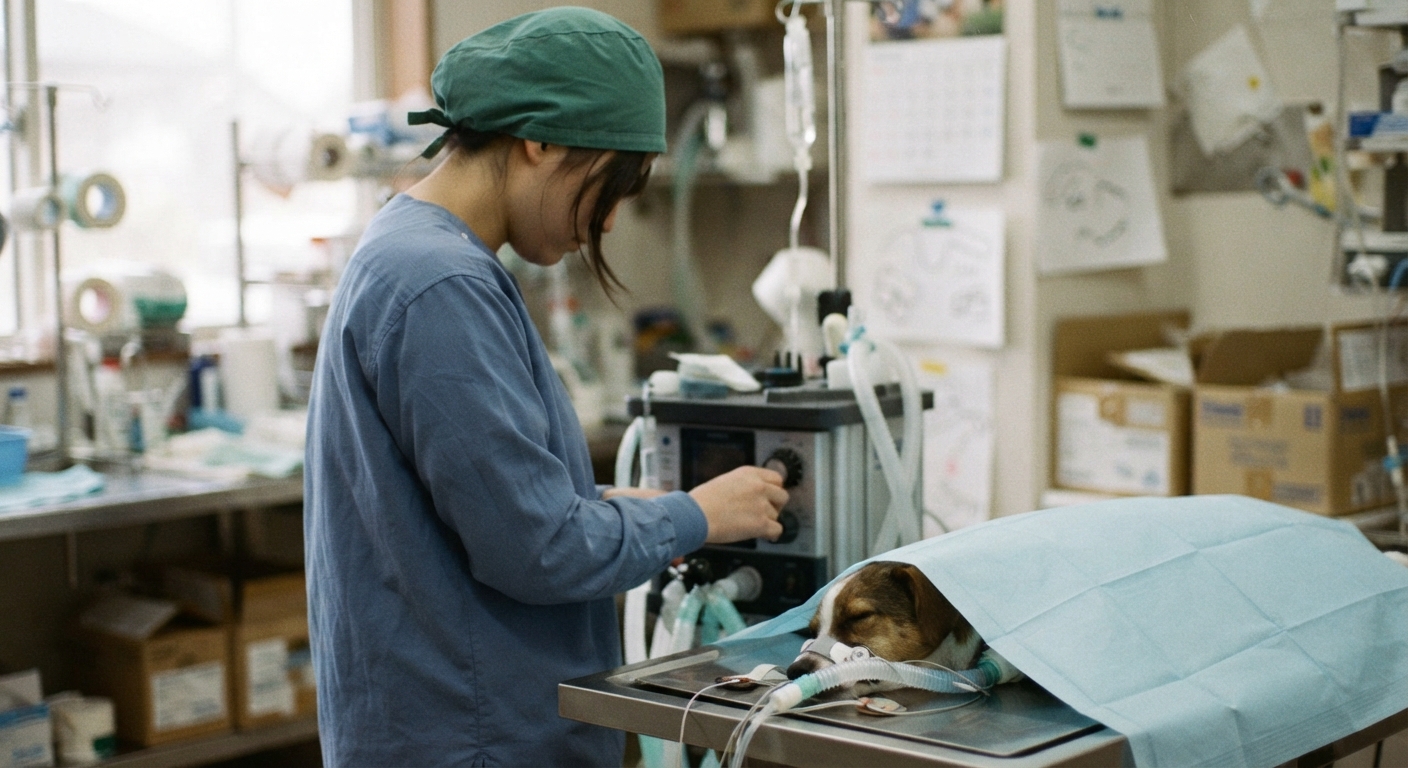
Think of it this way: the surgeon or vet performing the procedure is focused on the physical task, whether that’s removing a mass, extracting a tooth, or repairing a torn ligament. Meanwhile, someone else, often a trained veterinary technician, is entirely dedicated to keeping your pet safely unconscious, monitoring heart rate, blood pressure, oxygen levels, and body temperature throughout. That monitoring requires its own machines, its own drugs, and its own trained eyes. It’s a parallel job happening at the same time as the surgery, and it carries its own cost structure.
The type and amount of anesthesia also varies by procedure and by patient. A quick sedation for X-rays is priced differently than full general anesthesia for an orthopedic surgery that might last a couple of hours. Longer procedures generally mean more anesthetic drug used, more monitoring time, and more staff hours, so the anesthesia charge often scales with the length and complexity of the procedure rather than being a flat fee.
Understanding this separation matters for your budget because it means a “simple” procedure isn’t always cheap just because the physical task sounds minor. A tooth extraction might be quick for the vet to perform, but if your pet needs to be fully anesthetized for it, you’re still paying for the full anesthesia protocol, monitoring equipment, and recovery support. When you’re comparing estimates or trying to predict costs before a scheduled procedure, it helps to ask specifically what’s included under “anesthesia” so you’re not caught off guard by a bill that has several components you didn’t anticipate.
Pre-anesthetic bloodwork and monitoring fees you might not expect
Before most vets will put your pet under anesthesia, they want a clearer picture of how your pet’s body is functioning, particularly the liver and kidneys, since those organs process and clear anesthetic drugs. That usually means pre-anesthetic bloodwork, and it’s often required rather than optional, especially for pets who are older, have a known health condition, or haven’t had recent labwork on file.
This bloodwork is billed separately from both the procedure and the anesthesia itself, and it can catch pet owners off guard if they weren’t expecting it. Depending on your vet’s protocol, this might be a smaller panel checking a handful of basic values, or a more comprehensive panel that also checks electrolytes and other markers. Some clinics also want a urinalysis or a chest X-ray beforehand for certain patients, particularly older animals or those with a heart murmur or history of respiratory issues.
On top of the bloodwork, expect a monitoring fee that covers the equipment and staff time dedicated to watching your pet during the procedure. This often includes an IV catheter and IV fluids, which help maintain blood pressure and give the vet team a direct line to administer emergency drugs if something goes wrong. Pulse oximetry, blood pressure monitoring, and sometimes capnography (which measures the carbon dioxide your pet exhales, an indicator of how well they’re breathing) may all be itemized separately, or bundled into a single “anesthesia monitoring” charge depending on the practice.
None of this is unnecessary caution dressed up as a fee. These monitoring tools are what allow a vet team to catch a problem early, before it becomes a genuine emergency. But from a budgeting standpoint, it means the number you see for “anesthesia” on an estimate is often really a bundle of several smaller services: bloodwork, IV catheter placement, fluids, and monitoring equipment use, plus the anesthetic drugs themselves. When you’re planning for a scheduled surgery, ask your vet to break down each of these pieces so you know what’s driving the total and whether any of them might be skipped or reduced based on your pet’s health history.
How pet age, breed, and health status can affect anesthesia cost and risk
Not every pet carries the same anesthesia cost or risk, and this is one area where your specific dog or cat’s profile really does change the math. Age is one of the biggest factors. Younger, healthy pets typically tolerate anesthesia well and may need a more standard protocol. Senior pets, on the other hand, often need more pre-anesthetic testing, sometimes additional imaging, and a more conservative anesthesia plan that can include lower drug doses, closer monitoring, and sometimes longer recovery observation. All of that adds cost.
Breed matters too, particularly for dogs and cats with short noses and flat faces, sometimes called brachycephalic breeds. Bulldogs, pugs, Boston terriers, Persian cats, and similar breeds often have narrower airways, which makes the anesthesia recovery period riskier since they can have more difficulty breathing normally as they wake up. Vets often take extra precautions with these patients, which might mean a longer monitored recovery, specialized airway equipment on standby, or a longer stay before discharge, all of which can add to the bill.
Health status independent of age or breed also plays a big role. A pet with an existing heart condition, kidney disease, diabetes, or a history of seizures usually needs a more customized anesthesia plan. This might mean consulting with a specialist, using different or additional drugs, or keeping your pet hospitalized longer for observation. Overweight pets can also face added anesthesia risk and sometimes need adjusted dosing, which a vet will factor into the protocol.
None of this is meant to alarm you if your pet falls into one of these categories. Vets manage these cases every day and have protocols designed around exactly these risk factors. But it does mean that if your pet is older, brachycephalic, or has a chronic health condition, you should expect the anesthesia-related portion of any procedure to run higher than what a healthy young pet of a different breed might be quoted. When your vet gives you an estimate, ask directly whether your pet’s age, breed, or health history is expected to change the anesthesia plan or cost, so you’re not comparing your quote to a friend’s very different pet and wondering why the numbers don’t match.
What happens financially if complications extend recovery or require overnight monitoring
Most anesthesia procedures go according to plan, and pets wake up, recover for an hour or two, and go home the same day. But estimates are just that: estimates. If something doesn’t go smoothly, whether that’s a slower-than-expected recovery, a drop in body temperature, unexpected bleeding, or any other complication, the financial picture can shift quickly.
Extended monitoring is one of the more common add-ons. If your pet isn’t waking up as quickly as expected or their vital signs aren’t stabilizing, the vet team may want to keep monitoring for a longer stretch before you take your pet home. This usually means additional monitoring fees, and possibly additional medication if your pet needs something to manage pain, nausea, or blood pressure during that extended window.
An overnight stay is a bigger financial jump. If your pet needs to be hospitalized after a procedure, whether due to a complication or simply because the surgery was more involved than a same-day discharge allows, you’re now looking at hospitalization fees, which often include a boarding or “cage” fee, additional nursing checks throughout the night, continued IV fluids, and any medications administered during that stay. Some general practice vets don’t have overnight staff on-site, which means your pet might need to be transferred to an emergency or specialty hospital for overnight care, adding a transfer and a second facility’s fee structure into the mix.
It’s also worth knowing that complications can sometimes require additional diagnostics you didn’t originally budget for, like a repeat bloodwork panel to check how your pet’s organs are handling the stress, or imaging to check for an underlying issue that surfaced during the procedure. None of this is something you can predict with certainty ahead of time, which is exactly why it’s worth asking your vet, before the day of the procedure, what their protocol is if recovery doesn’t go as expected. Some clinics will give you a rough sense of what an extended stay might cost per additional night, which can help you build in a cushion when you’re setting aside money for the procedure.
This is also a good moment to think about how any pet insurance policy you have handles anesthesia and hospitalization costs tied to a covered procedure. Policies vary in how they categorize these charges, so if you have coverage, it’s worth checking your policy documents or calling your insurer ahead of a scheduled surgery to understand whether anesthesia-related complications and extended monitoring would be included under the same claim as the original procedure.
How to ask your vet for an itemized estimate that includes anesthesia-related costs
The single best thing you can do to avoid a surprising bill is ask for a detailed, itemized estimate before the day of the procedure, not a single lump-sum number. Most vet clinics are happy to provide this, and a good itemized estimate should include separate lines for the procedure itself, the anesthesia drugs, pre-anesthetic bloodwork, IV catheter and fluids, monitoring equipment, and any anticipated pain medication or take-home prescriptions.
When you’re reviewing the estimate, it’s worth asking a few specific questions. First, ask whether the anesthesia protocol might change based on your pet’s bloodwork results, since a finding that surfaces the day of surgery could shift the plan and the cost. Second, ask what the estimate assumes about recovery time, and what the cost would look like if your pet needed extended monitoring or an overnight stay. Many estimates are given as a range for exactly this reason, and it’s worth understanding what’s driving the low end versus the high end of that range.
It’s also reasonable to ask whether any of the anesthesia-related services can be adjusted based on your pet’s individual risk profile. For example, if your pet has had recent bloodwork done elsewhere, some vets may accept those results instead of running a brand-new panel, which could save you a repeat cost. This isn’t about cutting corners on safety, it’s about making sure you’re not paying twice for something you already have on file.
Finally, ask about payment timing and whether a deposit is required before the procedure is scheduled. Many clinics require some form of upfront payment or deposit for scheduled surgeries, and knowing that ahead of time gives you a chance to plan rather than scramble. If you have pet insurance, this is also the moment to check whether your plan requires you to pay upfront and file for reimbursement afterward, or whether the clinic has any direct-pay arrangement with your insurer. Either way, having the itemized estimate in hand makes it much easier to submit a clean, complete claim and know what to expect back.
Anesthesia and surgical risk costs aren’t something you can predict with perfect accuracy, but they’re also not a mystery. A little bit of upfront conversation with your vet, paired with a clear itemized estimate, goes a long way toward making sure the bill you get after the procedure looks like the one you were expecting, rather than a stack of surprises on top of an already stressful day.