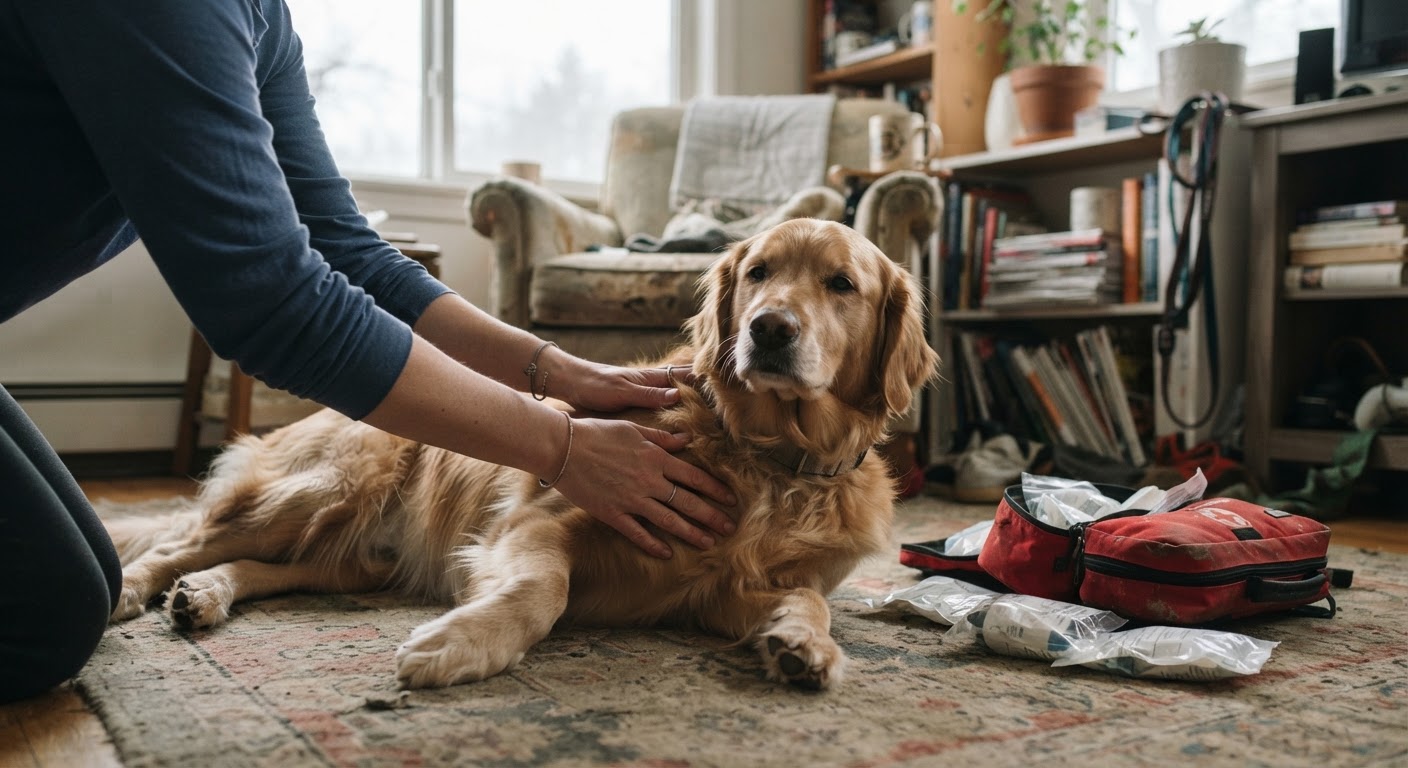

Most pet owners never think about CPR or first aid until they’re standing in their kitchen at 11 p.m. watching their dog choke on a piece of rawhide or their cat stagger around after getting into something toxic under the sink. In that moment, the difference between knowing what to do for the first sixty seconds and not knowing can shape everything that follows — including how the vet bill turns out.
This isn’t about replacing your veterinarian or an emergency animal hospital. It’s about what happens in the gap between “something is wrong” and “we’re in the car on the way to help.” A choking pet, a dog that’s overheated on a summer walk, a cat that’s cut a paw badly enough to bleed steadily — these are moments where a calm, informed owner can stabilize the situation, prevent it from getting worse, and sometimes avoid turning a scary but manageable event into a middle-of-the-night emergency room visit that costs several hundred dollars just to walk through the door.
Why basic first aid knowledge can change the outcome (and cost) of a pet emergency
Veterinary emergency rooms charge for urgency. An exam fee at an emergency clinic, before any treatment, testing, or medication is even discussed, is often priced well above what you’d pay for a same-day appointment at your regular vet. That price reflects the fact that ER vets are staffed and equipped for true emergencies around the clock — which is exactly why it’s worth knowing how to tell the difference between a true emergency and a scare that you can manage at home with a call to a vet or poison control line for guidance.
Knowing basic first aid doesn’t just help in the dramatic moments. It also helps you stay calmer, which matters more than people expect. A pet owner who knows how to check gum color, count breaths, or apply pressure to a wound is an owner who can describe the situation clearly to a vet on the phone, which often shapes whether the advice is “monitor at home” or “come in right now.” That clarity alone can save you an unnecessary trip, or it can get you moving faster when speed actually matters.
There’s also a financial reasoning bad outcomes are expensive in every direction. A minor cut that gets infected because it wasn’t cleaned and wrapped properly can turn into a costly treatment for an infection later. A choking incident that panics an owner into a chaotic car ride can result in secondary injury. First aid training doesn’t prevent every bad outcome, but it stacks the odds a little more in your favor, and it does it for a fraction of what a single ER visit costs.
Typical price ranges for in-person and online pet CPR/first aid courses
Pet CPR and first aid courses are one of the more affordable pieces of pet-related preparedness you can buy. In-person classes, often taught through local Red Cross chapters, community centers, animal shelters, or independent pet safety trainers, typically run somewhere in the range of a modest one-time fee — usually less than the cost of a single basic vet office visit. Some shelters and rescue groups offer them even more cheaply, or fold them into adoption events and community outreach programs.
Online, self-paced courses tend to sit at a similar or slightly lower price point, and they have the advantage of letting you go through the material at your own speed, rewatch demonstrations, and revisit sections later as a refresher. Some online platforms bundle a printable certificate, a first aid checklist, or a digital reference guide you can save to your phone, which is genuinely useful because during an actual emergency, you want fast reference material, not a class you took two years ago and half-remember.
Group classes, whether in person or virtual, sometimes offer a discount if you sign up with a partner, a family member, or a few neighbors who also have pets. If you’re part of a dog park group, a neighborhood pet-sitting circle, or a multi-pet household, it can make sense to split a class session and treat it as a shared investment in everyone’s animals.
Compared to almost anything else in the pet cost conversation — insurance premiums, emergency vet visits, ongoing medication — a first aid course is a small, one-time expense. It’s the kind of cost that’s easy to keep putting off precisely because it feels optional, right up until the moment it isn’t.
What these courses actually teach: choking, bleeding, heatstroke, poisoning response, and more
A typical pet CPR and first aid course walks through a fairly consistent set of core skills, usually taught with hands-on practice on mannequins or stuffed models designed to mimic dog and cat anatomy. You’ll generally learn how to check a pet’s vital signs, including how to find a pulse, how to assess breathing, and how to recognize signs of shock.
Choking response is almost always covered, including how to check an airway safely without getting bitten in the process, which matters more than people expect from a panicked animal. Courses also cover how to control bleeding with direct pressure and proper bandaging technique, since a wound that’s wrapped too loosely won’t help and one wrapped too tightly can cut off circulation.
Heatstroke and cold-related injuries are typically included as well, especially recognizing early warning signs before they become severe, and understanding what to do while getting a pet to care. Many courses also cover choking prevention for cats and small dogs, safe muzzling techniques for a scared or injured animal, and how to move a pet that may have a spinal or bone injury without making it worse.
Poisoning response is another common section, focusing less on identifying every toxic substance (which is genuinely a job for a vet or poison control hotline) and more on what to do in the first few minutes: staying calm, not inducing vomiting unless specifically instructed to by a professional, and gathering information like the substance, the amount, and the time of exposure so you can relay it accurately.
Good courses are honest about their limits. They teach you to stabilize and communicate, not to diagnose or treat on your own. The goal is buying time and improving the information you can hand off to a professional, not becoming a substitute for one.
How having a first aid kit and know-how can reduce unnecessary ER visits
A first aid course pairs naturally with a basic pet first aid kit, and together they can shift a surprising number of situations from “emergency room now” to “manageable at home with a follow-up call.” A simple kit — gauze, adhesive tape, a digital thermometer, saline solution, a muzzle or soft wrap, tweezers, and a pet-safe antiseptic — costs relatively little and takes up almost no space in a closet or car.
The real value shows up in the moments where you’re deciding whether something needs to be handled tonight or can be monitored and addressed during regular vet hours. A superficial cut that’s cleaned and wrapped properly might just need a vet check the next day instead of an emergency visit. A pet that’s overheated but caught early, cooled down safely, and monitored may recover without ever needing a clinic visit at all. Knowing what “safely” means in that sentence is exactly what a first aid course gives you.
None of this means skipping care when it’s actually needed. Some symptoms always warrant an urgent call or visit, no matter how prepared you are — that’s not a judgment call a first aid class asks you to make on your own, and reputable courses are clear about which situations call for immediate professional help rather than home management. What changes is your ability to recognize which category a situation falls into, respond appropriately in the meantime, and avoid the kind of panicked, uninformed emergency visit that happens simply because you didn’t know what else to do.
Where to find low-cost or free training through shelters, Red Cross, and community groups
You don’t have to look far to find affordable pet first aid training. Local animal shelters and rescue organizations frequently offer classes, sometimes for free or a small donation, especially around adoption events or community outreach days. It’s worth calling your nearest shelter or checking their event calendar, since these sessions don’t always get advertised widely.
Local chapters of the Red Cross have historically offered pet first aid and CPR courses, often taught alongside their human first aid programs. Community centers, YMCAs, and continuing education programs through local colleges sometimes offer similar sessions, particularly in areas with active pet-owner communities.
Veterinary clinics themselves sometimes host informal first aid nights, especially in the fall before cold weather hits or in early summer ahead of heatstroke season. These sessions are sometimes free as a community goodwill offering, and they have the added benefit of being taught by people who may actually treat your pet someday, which can build a bit of comfort and familiarity.
Online, several established pet-focused training platforms and even some general first aid certification providers offer self-paced pet CPR courses at a low fixed cost, often with lifetime access to the material so you can review it again down the road. If cost is the main barrier, it’s worth checking whether your pet insurance provider, if you have one, offers any discount, partnership, or free access to first aid resources as part of their policy perks — some do include this as an add-on benefit, though it varies quite a bit by provider and policy, so it’s worth checking your own plan’s materials rather than assuming.
How this fits alongside pet insurance and an emergency fund as part of a complete plan
First aid training, a stocked kit, pet insurance, and a dedicated emergency fund all serve different but overlapping purposes, and none of them fully substitutes for the others. First aid knowledge helps you respond well in the first critical minutes of a scare. A first aid kit gives you the physical tools to act on that knowledge. Pet insurance helps absorb the cost of the treatment that follows once you’re in front of a vet, assuming the situation fits within your policy’s coverage and any waiting periods or exclusions that applied when you signed up. An emergency fund covers the gap that insurance doesn’t — deductibles, upfront payment before reimbursement, exam fees, or costs for anything outside your specific policy.
Thought of together, these four pieces form a fairly complete safety net. The first aid training and kit reduce the chance that a manageable situation turns into a crisis. The insurance and emergency fund reduce the chance that a real crisis turns into a financial one. None of them are expensive on their own, and a first aid course in particular is one of the cheapest, most overlooked pieces of the whole plan.
If you’re already budgeting for pet insurance premiums and building up a small emergency fund for vet costs, setting aside an hour and a modest fee for a CPR and first aid course is a natural next step. It’s a small, one-time cost that pays off not by preventing every emergency, but by making you a calmer, more capable owner in the moments that matter most — which, in the end, is often what keeps a bad night from turning into a bigger bill than it needed to be.