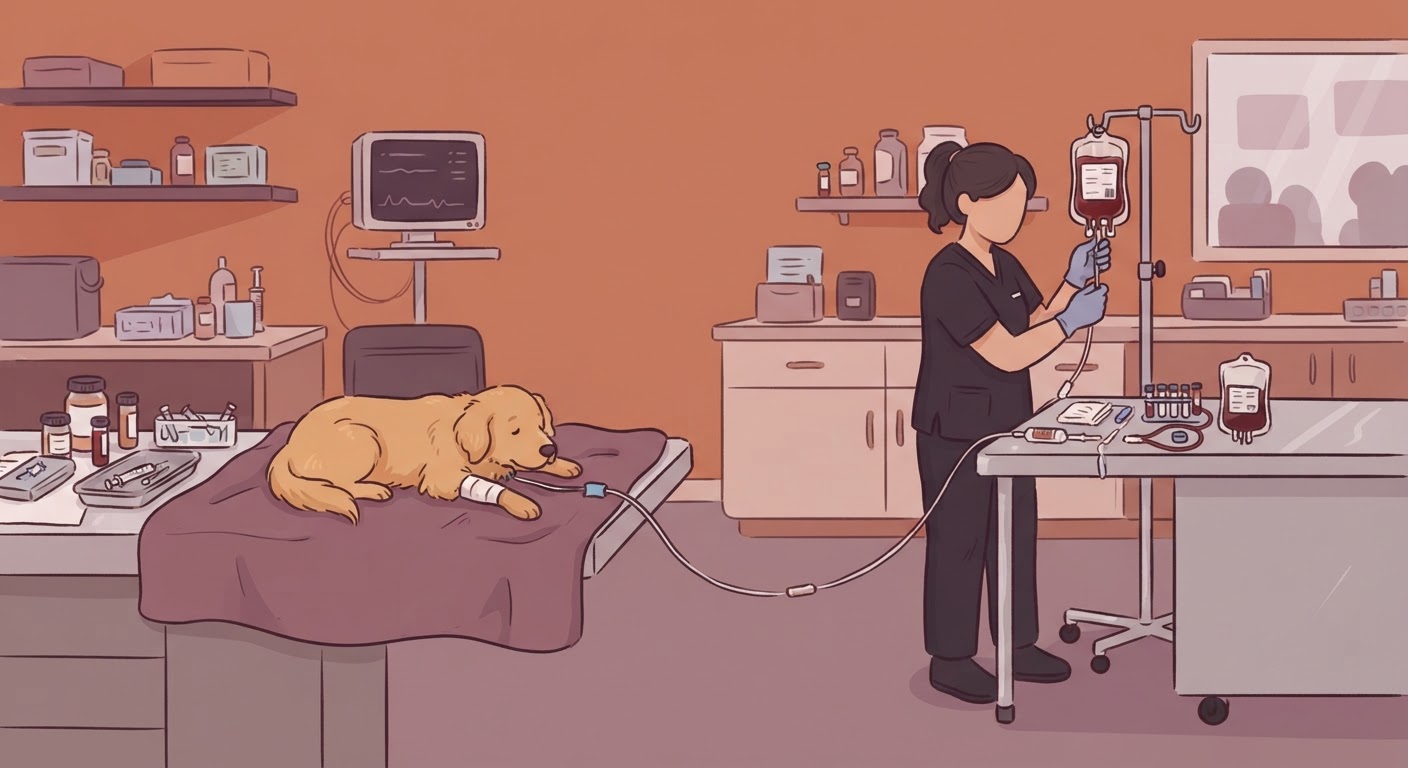
When a Transfusion Becomes Necessary
Most pet owners never think about blood transfusions until a vet says the word out loud, usually in an exam room that smells like antiseptic and feels too bright. It’s one of those moments that splits a normal day in half. Understanding why this treatment gets used can make the moment slightly less disorienting if it ever comes.
Trauma is one of the most common triggers. A dog hit by a car, a cat that fell from a height, or any pet with significant internal bleeding can lose blood faster than its body can replace it. In these cases, a transfusion isn’t a nice-to-have; it’s often the difference between stabilizing and not making it through the night.
Toxin exposure is another major category. Certain rodenticides interfere with the blood’s ability to clot, leading to dangerous internal bleeding that can require both whole blood and clotting factors found in plasma. Some human medications and household toxins can trigger similar reactions, which is part of why ER vets ask so many questions about what a pet might have gotten into.
Immune-mediated diseases are a third big driver. In conditions like immune-mediated hemolytic anemia, a pet’s own immune system mistakenly destroys its red blood cells. The pet can go from seemingly fine to critically anemic in a matter of days. Transfusions buy time while other treatments work to calm the immune response.
Plasma therapy specifically comes into play for clotting disorders, certain infectious diseases, and situations where a pet needs proteins or antibodies rather than red blood cells themselves. It’s also sometimes used for very young or immune-compromised animals who need a boost of protective antibodies. Surgical complications, severe blood loss during whelping, and some cancers can also land a pet in need of donor blood products. The common thread across all of these is urgency. Nobody schedules a transfusion weeks in advance; it happens because something has gone seriously wrong, right now.
Breaking Down the Real Cost
The sticker shock with transfusions rarely comes from one single line item. It comes from a stack of them, each necessary, each adding to a total that can feel overwhelming when you’re already stressed about your pet’s condition.
Before any blood product goes into a pet’s body, there’s blood typing to determine compatibility, especially important in cats, who have blood types that can react severely if mismatched. Then comes cross-matching, a lab process that checks whether the donor blood and the recipient’s blood will actually get along. Skipping this step risks a transfusion reaction, so it’s not optional, and it’s not free.
Next is the blood product itself. Whether it’s whole blood, packed red cells, or plasma, this material has to come from somewhere. Some veterinary hospitals maintain their own donor animals or work with veterinary blood banks; others order units from regional suppliers. Either way, someone had to screen a donor, collect and process the product, store it properly, and ship it if needed. All of that gets reflected in the price of the unit itself, and pets often need more than one unit depending on their size and how much blood they’ve lost.
Then there’s the hospitalization surrounding the transfusion. A pet receiving donor blood needs close monitoring, often for hours, sometimes overnight or longer, to watch for reactions and to see whether the treatment is actually working. That monitoring involves veterinary staff time, repeat bloodwork to track how the pet is responding, IV fluids, and sometimes additional medications to manage pain, nausea, or the underlying condition that caused the crisis in the first place.
If the transfusion happens at an emergency or specialty hospital rather than a regular daytime clinic, expect after-hours or emergency facility fees layered on top of everything else. None of these pieces are exotic or unusual by veterinary standards, but stacked together, they explain why a transfusion-related bill often reaches into the thousands rather than the hundreds, particularly when the pet needs multiple units or an extended hospital stay.
Why It Rarely Shows Up as a Standalone Charge
If you look at a bill after a transfusion, you’ll rarely find a single tidy line that says “transfusion” with one price next to it. Instead, it’s usually folded into a broader emergency or ICU bill that includes diagnostics, hospitalization, medications, and monitoring, all wrapped around the transfusion itself.
There’s a practical reason for this. A transfusion is almost never given in isolation. A vet has to first figure out why the pet needs one, which means bloodwork, imaging, and sometimes additional testing. Then, during and after the transfusion, the pet needs vital sign monitoring, repeat labs to check how the treatment is progressing, and often continued treatment for whatever caused the problem, whether that’s a toxin, an autoimmune condition, or internal injuries from trauma.
This bundling makes sense clinically, since the transfusion is one tool within a larger treatment plan rather than the whole plan itself. But it does make bills harder to parse after the fact. When owners try to figure out “how much did the transfusion cost” versus “how much did everything else cost,” the honest answer is often that the categories overlap so much that a clean split doesn’t really exist. This matters when it comes to insurance, because how a claim is categorized can affect what gets reimbursed and how quickly.
How Insurance Typically Handles These Costs
Pet insurance policies generally treat transfusions and plasma therapy as part of covered veterinary treatment for illness or injury, not as some separate, oddball category. That’s good news in the sense that most comprehensive accident-and-illness policies won’t outright exclude transfusions the way they might exclude something like a pre-existing condition or elective procedure.
That said, how the claim is processed usually depends on how the visit as a whole is categorized. Since transfusions are almost always tied to a broader emergency or hospitalization event, insurers typically reimburse them under whatever category that visit falls into, such as “emergency care,” “hospitalization,” or “illness treatment.” The specific blood product and cross-matching charges usually ride along within that larger claim rather than being adjudicated separately.
This is where it helps to understand the shape of your policy rather than just its existence. Most policies apply a percentage reimbursement, commonly somewhere in the range of a portion of the total covered bill, after your deductible has been met. Some plans also apply annual or per-incident payout caps, and it’s worth knowing whether your plan has any sub-limits for specific categories like hospitalization or specialized treatments, since a cap that seemed generous on paper can feel very different when a transfusion-heavy ICU stay pushes past it.
Pre-existing conditions are another wrinkle. If a pet has a documented history of a blood disorder or immune condition, subsequent transfusions related to that same condition may be excluded, depending on how the policy defines pre-existing conditions and when coverage began. This is one more reason it pays to read your policy’s definitions section rather than skimming past it, since the wording around “pre-existing” and “chronic” can vary meaningfully between insurers.
Waiting periods matter here too. Some policies impose waiting periods for illness coverage that are longer than the waiting period for accidents. A pet enrolled recently might find that an illness-related transfusion isn’t covered yet, even though the policy would have covered a transfusion tied to a car accident on day one. Knowing your policy’s specific waiting periods, not just assuming a generic timeframe, can save a lot of confusion during an already stressful moment.
Preparing Financially Before a Crisis Hits
The best time to think about transfusion costs is before you’re standing in an ER lobby with a scared pet and a racing heart. A little preparation now can spare you a lot of scrambling later.
Start by reviewing your own policy, if you have one, and looking specifically for how it defines hospitalization, emergency care, and any annual or per-condition payout limits. Note your deductible and reimbursement percentage, and do a rough mental math exercise: if a bill came in at a few thousand dollars, what would you actually be reimbursed, and what would you still owe out of pocket while waiting for that reimbursement to arrive? Most pet insurance works on a reimbursement model, meaning you typically pay the clinic upfront and get reimbursed afterward, so cash flow matters as much as the coverage percentage.
It’s also worth building or maintaining a dedicated pet emergency fund separate from your insurance, even a modest one. Insurance helps you recover cost after the fact, but most emergency clinics expect payment, or at least a substantial deposit, before treatment begins. Having accessible savings, a low-interest credit option, or a veterinary-specific financing arrangement set up in advance means you’re not trying to solve a financing problem in the middle of a medical crisis.
If you have a moment before an emergency happens, or even during a calmer visit to your regular vet, it doesn’t hurt to ask a few practical questions. Does this clinic have blood products on hand, or would a transfusion require transfer to another facility? What’s the general cost range for blood typing and cross-matching at this location? Is there a relationship with a regional veterinary blood bank, and how quickly can product be obtained if needed? These questions aren’t about doubting your vet’s judgment; they’re about understanding logistics so that if the moment comes, you’re not learning the answers for the first time under pressure.
Finally, keep your pet’s medical records organized and accessible, including any history of blood disorders, prior transfusions, or immune conditions. If an emergency happens away from your regular vet, having this information ready can speed up decision-making and may also matter for how an insurance claim gets processed later. A folder on your phone with vaccination records, recent bloodwork, and a list of current medications takes ten minutes to set up and can save precious time when minutes actually count.
Transfusions and plasma therapy are dramatic interventions by nature, reserved for moments when a pet’s body needs outside help just to keep functioning. They’re not everyday treatments, but they’re common enough in emergency veterinary medicine that it’s worth understanding the shape of the cost and the coverage before you’re the one signing the estimate form. A little groundwork now, reading your policy closely, asking your vet a few logistics questions, and keeping some financial cushion in reserve, won’t make the moment easy if it comes. But it will make it a lot more manageable.