If you’ve ever rushed a cat to the emergency vet at 2 a.m. because he was straining in the litter box and nothing was coming out, you already know how frightening feline lower urinary tract disease (FLUTD) can be in the moment. What a lot of owners don’t realize until later is that the emergency visit is often just the opening chapter. FLUTD, and the urinary blockages that can come with it, tend to be chronic conditions that cats live with — and that owners budget around — for years, not a single bad weekend.
What ongoing FLUTD management actually looks like
FLUTD is really an umbrella term for a handful of conditions that affect a cat’s bladder and urethra — things like bladder inflammation (cystitis), crystals or stones forming in the urine, and in male cats especially, a physical blockage of the urethra that stops them from urinating at all. The acute crisis, where a cat can’t pass urine and needs emergency care, is what usually gets a cat’s diagnosis started. But the disease itself doesn’t end when the immediate emergency is resolved.
Once a cat has had one urinary episode, many vets consider that cat prone to having another. So “ongoing management” isn’t about curing something and moving on. It’s about creating a daily routine — diet, water intake, litter box habits, weight, stress levels — that lowers the odds of a repeat episode, plus a schedule of checkups to catch trouble early rather than in the middle of another emergency.
In practice, this usually means a permanent or long-term switch to a therapeutic urinary diet, more attention to how much water the cat is drinking, regular urine testing to see if crystals or inflammation are creeping back, and sometimes ongoing medication for cats prone to stress-related flare-ups. None of this is dramatic on any given week. It’s the kind of low-grade, recurring cost that’s easy to underestimate until you add it up over a year — or five.
Typical recurring costs: diet, urinalysis, and imaging
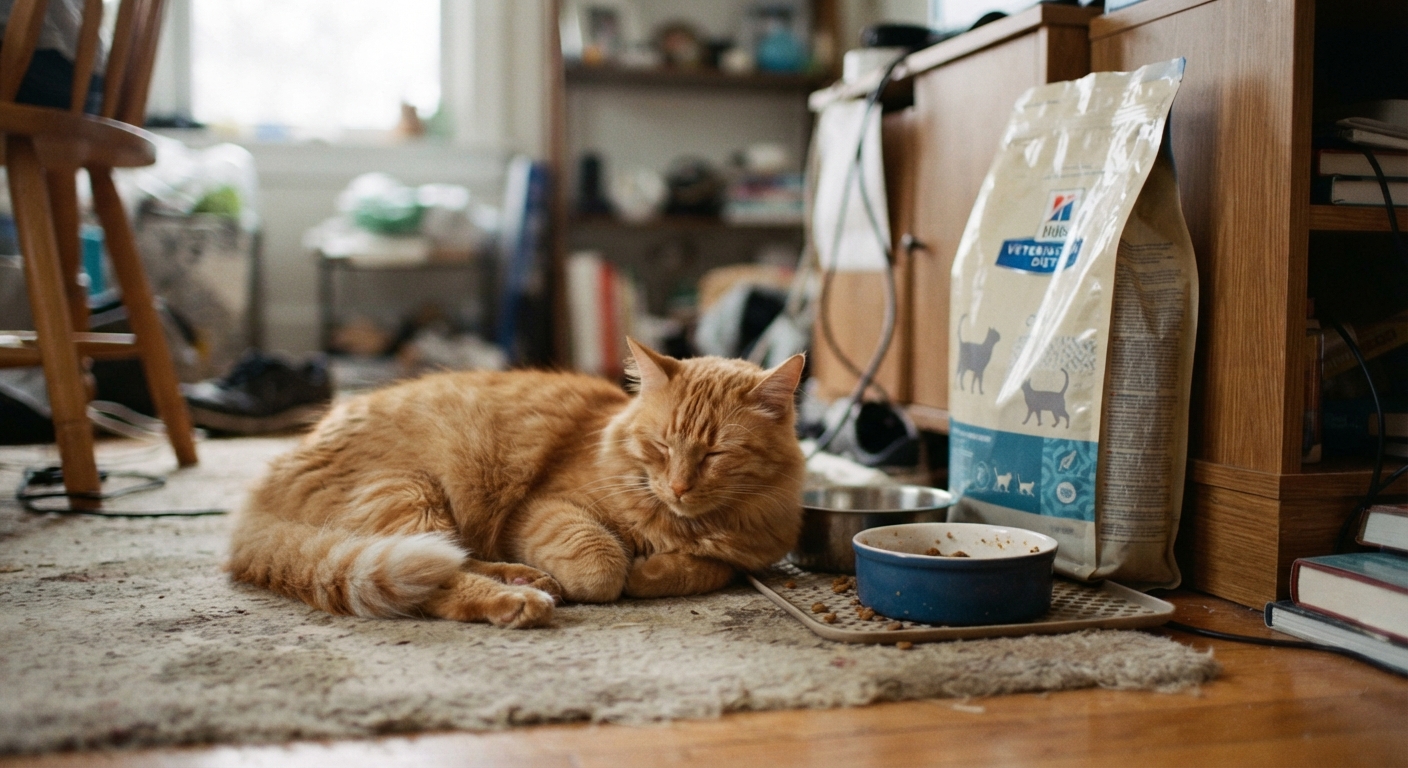
The single most consistent ongoing cost for a cat with FLUTD is the prescription urinary diet. These therapeutic foods are formulated to help dilute urine and manage mineral content, and they cost meaningfully more than a regular bag of cat food or standard canned food. Because they need to be fed consistently — not just during a flare-up — this becomes a permanent line item in a household’s monthly pet spending, not a one-time purchase.
Beyond food, most cats with a history of FLUTD need periodic urinalysis to check for crystals, blood, or infection, even when they seem to be doing fine. How often this happens varies by cat and by vet’s recommendation, but it’s common for these checks to happen more than once a year for cats with a history of recurring issues, especially in the months after a flare-up.
For cats who’ve had more than one episode, or whose symptoms don’t resolve as expected, vets often recommend imaging — X-rays or ultrasound — to check for bladder stones or other structural issues that a basic urine test won’t reveal. Imaging tends to be one of the pricier pieces of ongoing FLUTD care, and it’s not something most owners plan for as a “routine” cost, even though for at-risk cats it can become a recurring one.
Then there are the incidental costs that come with managing a chronic condition: exam fees for the checkup visits themselves, occasional medications for inflammation or stress, and sometimes changes to litter box setup or environment that a vet might suggest to reduce stress-related flare-ups. None of these individually breaks the bank, but together they add a steady drip to the household budget that’s easy to lose track of if you’re only thinking about the next emergency bill.
How multiple flare-ups add up over a cat’s life
Here’s where the math starts to matter. A single urinary blockage emergency, especially one requiring hospitalization, is typically one of the more expensive individual vet bills a cat owner will face — often rivaling or exceeding other major emergency categories. But FLUTD’s real financial impact isn’t just that one bill. It’s the pattern.
Cats who’ve had one blockage are statistically more likely to have another, particularly if underlying risk factors — like being overweight, being male, or living an entirely indoor, low-activity lifestyle — aren’t addressed. So the realistic financial picture for a cat with FLUTD isn’t “one big bill and then ongoing diet costs.” It’s often: one or more emergency episodes over the cat’s lifetime, layered on top of years of therapeutic food, periodic testing, and the occasional imaging study when things flare up again.
Think of it less like a one-time expense and more like a mortgage — a manageable-looking monthly payment that, added up over the years a cat lives with the condition, becomes one of the larger cumulative costs in that cat’s overall care. Owners who only budget for the acute event and not the years of management around it are often caught off guard by how much the “quiet” years actually cost when totaled up.
Where pet insurance helps — and where it typically comes up short
Pet insurance can genuinely change the financial picture for FLUTD, but understanding exactly what it covers (and doesn’t) matters more here than with almost any other condition, because FLUTD is chronic and recurring by nature.
If a cat is enrolled in a policy before any signs of urinary trouble appear, and the policy doesn’t exclude urinary conditions, insurance can help substantially with the acute costs — the emergency visit, hospitalization, catheterization, and related diagnostics during a blockage episode. This is where insurance tends to do its best work: covering the large, unpredictable, expensive event that most household budgets aren’t built to absorb comfortably.
Where things get more complicated is with the ongoing management side. Most standard accident-and-illness policies do cover treatment for diagnosed conditions, including recurring flare-ups of an already-diagnosed illness, as long as the condition wasn’t pre-existing when the policy started. But there are a few catches worth knowing:
Prescription diets are the most commonly excluded ongoing cost. Many policies specifically carve out food — even therapeutic, vet-recommended food — as a non-covered expense, treating it more like a supply than a medical treatment. This is worth checking directly in a policy’s terms rather than assuming, because it’s one of the biggest recurring costs for FLUTD cats and one of the easiest to be surprised by.
Pre-existing condition rules are the other major factor. Once a cat has been diagnosed with FLUTD, that condition — and often anything considered related to it, like future urinary blockages — typically becomes a pre-existing condition for insurance purposes going forward, even if you switch to a new insurer. This is exactly why timing matters so much with pet insurance: coverage decisions made before any symptoms ever appear have a much bigger financial impact down the line than decisions made after a cat’s first urinary episode.
Wellness or preventive-care add-ons, where available, sometimes help offset routine urinalysis costs, but these add-ons usually have their own annual caps and aren’t a substitute for a solid accident-and-illness policy. And annual payout limits, if a policy has them, are worth checking against the kind of cumulative, recurring costs FLUTD tends to generate — a policy that looks generous for a single emergency can look different once you’re filing claims for a follow-up ultrasound and a check on top of an earlier hospitalization in the same policy year.
None of this means insurance isn’t worth having for a cat prone to urinary issues. It often is. It just means the real value shows up most clearly for the big, unpredictable emergency costs, while the steady, predictable costs of daily management are something most owners should expect to budget for directly, insurance or not.
Practical budgeting steps for owners of at-risk cats
If your cat falls into one of the higher-risk categories — male, overweight, or living an entirely indoor and fairly sedentary life — it’s worth treating FLUTD less like a hypothetical and more like a cost category you plan for in advance, the same way you might plan for a car’s regular maintenance rather than just hoping nothing breaks.
A few concrete steps make a real difference:
Get insured before there’s any sign of trouble, if you’re going to insure at all. This is the single biggest lever you have, because it’s the only point at which FLUTD coverage decisions aren’t complicated by pre-existing condition rules. Waiting until after a first flare-up to shop for a policy will almost certainly mean urinary issues are excluded from whatever you buy next.
Build a specific line item into your monthly pet budget for prescription diet costs, even before your cat needs one. If your cat is currently healthy but checks several risk boxes, setting aside the difference between regular food and therapeutic food costs each month — even into a simple savings buffer — means you won’t feel the switch as a financial shock if and when it happens.
Ask your vet directly what a realistic monitoring schedule looks like for your specific cat, and price out roughly what a year of that schedule costs at your clinic — exam fees, urinalysis, any recommended imaging. Having a real number, rather than a vague sense of “it’ll probably be fine,” makes it much easier to budget accurately instead of guessing.
Take weight and hydration seriously as ongoing, low-cost prevention. Keeping an at-risk cat at a healthy weight and encouraging more water intake — through wet food, water fountains, or multiple water stations — doesn’t guarantee a cat will never have a flare-up, but it’s a genuinely low-cost habit compared to the alternative, and it’s one of the few levers owners have real control over day to day.
Keep a small emergency fund specifically earmarked for pet costs, separate from general savings, sized around what a hospitalization at your local emergency clinic typically runs. Whether or not you carry insurance, having this cushion means a 2 a.m. trip to the emergency vet is a stressful night rather than a financial crisis on top of a stressful night.
FLUTD isn’t a condition most owners can prevent outright, especially in cats with built-in risk factors they can’t change. But it is a condition you can plan for financially with a fair amount of precision, once you understand that the real cost isn’t the dramatic emergency bill alone — it’s the years of quiet, recurring care around it.