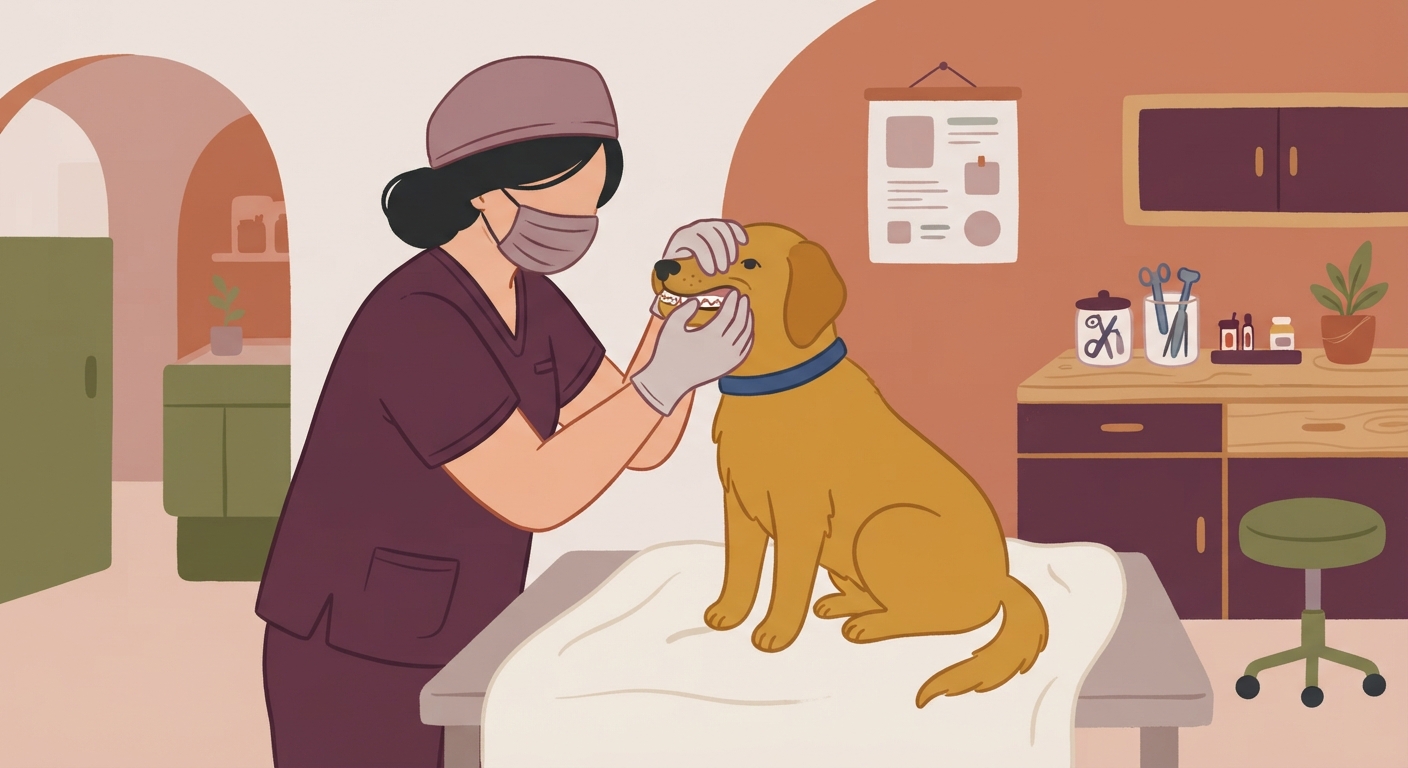
Most pet owners think of dental care the way they think of their own trip to the dentist: you go in, they clean things up, you leave with fresher breath, and you don’t think about it again for a year. For a lot of dogs and cats, that’s not how it actually plays out. Periodontal disease is progressive, which means once it starts, it tends to keep moving forward unless something interrupts it. A cleaning can slow the process or reset the clock, but it doesn’t cure the underlying tendency toward gum disease, and it doesn’t undo damage that’s already happened below the gumline.
That’s the piece that surprises a lot of budget-conscious owners. You pay for “the dental,” you assume you’re done, and then eighteen months later you’re back in the exam room hearing about a loose tooth or an abscess. It’s not that the first cleaning failed. It’s that dental disease in dogs and cats, especially small-breed dogs and older cats, is often a chronic condition that gets managed over years rather than solved in a single visit. Genetics, breed-related jaw and tooth crowding, age, and how well plaque control is kept up at home all play a role in how fast it comes back. Once a pet has had one significant dental event, especially one involving extractions or bone loss, the odds of needing another round down the line go up, not down.
Thinking about dental care as an ongoing budget line, similar to how you’d think about managing a chronic skin condition or joint issue, tends to lead to better financial planning than treating each cleaning as an isolated expense.
Typical costs for extractions, repeat cleanings, and oral X-rays over a pet’s lifetime
A routine dental cleaning with anesthesia, scaling, and polishing is only the baseline. Once X-rays reveal bone loss, root resorption, or fractured teeth, the bill shifts into a different category. Extractions add cost per tooth, and multi-rooted teeth take more time and skill to remove than single-rooted ones, which affects price. Oral X-rays, which are considered standard of care for any thorough dental procedure now, add to the visit whether or not anything gets pulled, because vets can’t know what’s happening below the gumline without imaging.
Then there’s the follow-up. A pet that’s had several extractions may need a recheck exam, possibly repeat imaging on a problem area, and pain management medication for the recovery period. If the remaining teeth are still in rough shape, another cleaning might be recommended sooner than the typical annual or biennial schedule, which compresses costs into a shorter timeframe than owners expect.
Zoom out over a pet’s lifetime and the pattern for a dog or cat prone to dental disease often looks like this: an initial cleaning, then a second cleaning a year or two later that includes a handful of extractions once problems are found, then a maintenance cleaning some years after that, possibly with a few more extractions if the pet lives long enough. Each of those events carries its own anesthesia fee, its own imaging fee, its own medication costs, and sometimes an overnight stay if the extractions were extensive or the pet is older and needs closer monitoring during recovery. None of these are one-time costs in the way a lot of new owners assume going in.
Why the costs compound rather than stay flat
The tricky part is that each dental event tends to build on the last one. A mouth that’s already lost several teeth is often more prone to problems in the remaining teeth, partly because the bite and chewing pattern shifts, and partly because the same underlying susceptibility to plaque and tartar buildup that caused the first round of disease is usually still there. So instead of costs staying level over a pet’s life, they often climb, with each cleaning cycle potentially costing more than the one before it as more teeth need attention or more advanced imaging and treatment are needed.
How insurance treats recurring dental treatment versus one-off cleanings
This is where a lot of owners get tripped up, because “dental coverage” is not one consistent thing across pet insurance policies. Plans vary quite a bit in how they draw the line between routine dental maintenance and dental disease treatment, and that distinction matters enormously for your wallet.
Routine cleanings, the kind done to prevent disease before it starts, are frequently treated as wellness or preventive care. Many accident-and-illness policies don’t cover this type of cleaning at all unless you’ve added a separate wellness or preventive care rider, which usually comes with its own annual cap and its own premium cost. If you want help with the cost of routine cleanings specifically, that’s often something you have to opt into and pay for separately, not something bundled automatically into a standard policy.
Dental disease treatment is a different story, at least in principle. When a cleaning uncovers periodontal disease, and the vet needs to do extractions, treat an infection, or address a fractured tooth, that’s typically classified as illness or injury treatment rather than wellness care. Many accident-and-illness policies will cover this kind of treatment, subject to your deductible and reimbursement percentage, the same way they’d cover treatment for an ear infection or a torn ligament. That’s meaningfully different from routine cleaning coverage, and it’s worth understanding which category your policy actually places different dental procedures into, since the wording varies by insurer.
The recurring nature of dental disease adds another layer. Because periodontal disease is considered a chronic, progressive condition, insurers may treat it similarly to how they treat other chronic conditions once it’s established. That has a few practical implications worth knowing before you’re mid-crisis:
First, pre-existing condition exclusions can come into play. If your pet already had documented periodontal disease, missing teeth, or a diagnosed dental condition before you enrolled in a policy or before a waiting period ended, treatment related to that specific condition may be excluded going forward, even if it flares up again later. This is a big reason why getting dental issues addressed and enrolling in coverage as early as possible, ideally before problems show up, tends to work out better financially than waiting until a pet already has a dental history.
Second, some policies apply per-condition or per-incident considerations that can affect how ongoing dental treatment for the same underlying issue is handled over multiple policy years, particularly around deductibles that reset annually. Understanding whether your plan uses an annual deductible or a per-condition deductible structure can change how much a second or third dental event costs you out of pocket, since it affects whether you’re starting fresh each policy year or not.
Third, annual payout caps matter more for chronic conditions than one-off issues. If a policy has a relatively low annual limit, a single major dental event with extensive extractions and imaging could eat through a big chunk of that limit in one visit, leaving less room if something else comes up that same policy year.
None of this means dental coverage isn’t worth having. It means the details of how a specific policy defines and handles dental treatment are worth reading closely, ideally before you need to use it, rather than assuming all pet insurance treats teeth the same way.
Signs your pet’s dental issue is becoming a long-term budget item
Some patterns tend to signal that a pet’s dental situation is moving from an occasional expense into something that needs a standing line in the household budget. Recognizing these early doesn’t change the underlying biology, but it does help with planning ahead instead of getting blindsided.
One signal is frequency: if your pet’s cleanings are being recommended annually rather than every couple of years, or if the vet is flagging new problem areas at each visit rather than confirming things look stable, that’s a sign the disease process is active and progressing rather than static.
Another is the shift from cleaning-only visits to visits that consistently involve extractions. Once a pet has needed extractions at more than one dental visit, it’s reasonable to expect that pattern may continue, since the same susceptibility that led to tooth loss the first time is generally still present.
A third signal is when your vet starts talking about at-home management as damage control rather than prevention, things like prescription dental diets, specific water additives, or more frequent home brushing, framed around slowing progression rather than avoiding the issue altogether. That framing usually means the condition is considered established and chronic rather than something that’s going to fully resolve.
Age and breed tendencies also factor in. Smaller dog breeds are generally more prone to crowded teeth and periodontal disease, and cats can develop their own set of chronic dental issues that tend to recur. If your pet falls into a higher-risk category, it’s worth mentally budgeting for dental care as a recurring cost from early on rather than being caught off guard later.
Practical ways to slow progression and space out major expenses
While there’s no guaranteed way to stop chronic dental disease entirely once it’s underway, there are practical steps that tend to slow the pace of progression, which in turn stretches out the time between costly interventions and softens the financial hit.
Daily or near-daily toothbrushing at home, when a pet will tolerate it, is one of the most cost-effective tools available, since it directly targets the plaque buildup that drives the whole disease process. It’s not glamorous and it takes consistency, but it’s far cheaper than an extra dental cleaning down the line.
Dental-specific diets, treats, and chews designed to reduce plaque and tartar can help as a supplement to brushing, though it’s worth remembering that no chew or treat replaces professional cleaning once disease is established. These products work best as part of an ongoing routine rather than a substitute for veterinary care.
Sticking to the cleaning schedule your vet recommends, rather than stretching it out to save money in the short term, often saves money in the long term. Catching plaque and early gum inflammation before it progresses to bone loss and tooth mobility generally means a simpler, less expensive cleaning instead of a visit that turns into multiple extractions.
On the financial planning side, setting aside a dedicated pet care fund, even a modest one, specifically earmarked for recurring dental and other chronic care costs can take some of the sting out of these visits, since you’re not scrambling to cover them from scratch each time. Pairing that fund with an accident-and-illness insurance policy, and understanding exactly how that policy treats dental treatment versus wellness cleanings, gives you two layers of protection instead of relying on either savings or insurance alone.
Finally, timing matters when you have some control over it. If your pet is young and dental disease hasn’t shown up yet, getting insurance in place before any dental issues are diagnosed avoids the pre-existing condition problem entirely for that condition. If your pet already has some dental history, it’s still worth reviewing policy options, since some insurers may still offer coverage for future, unrelated dental events even if a specific existing condition is excluded. Reading the policy details on this point before you buy, rather than after a claim gets denied, saves a lot of frustration.
Chronic dental disease in dogs and cats isn’t anyone’s fault, and it’s rarely something a single trip to the vet fully resolves. Treating it as an ongoing part of your pet’s healthcare budget, the same way you might budget for a chronic joint or skin condition, tends to lead to fewer financial surprises and a clearer picture of what your pet’s care actually costs over the years you have together.